Keeping up with the Joneses on a boutique hotel budget is tricky. The market demands that independent properties offer seamless digital experiences like mobile check-in and instant communication — without losing the human touch. And while tech stacks are a corporate mandate at major hotel chains, they can make or break an independent hotel. Without massive corporate IT resources, choosing software is risky.
The right independent hotel management software has the proper level of flexibility and automation to improve operations, guest experience and revenue. In this guide, we’ll explore the existing options for boutique hotels in 2026 and how to choose the right one for your property.
Best Boutique Hotel Management Software
Key Features
Canary
AI-powered Guest Management System, Mobile Check-In, Guest Messaging, Dynamic Upsells, AI Voice, Digital Compendium, Smart Checkout, Mobile Key integration, hospitality-specific AI workflows
Mews
Cloud-based Property Management System (PMS), self-service kiosks, automated payments, housekeeping management, open Application Programming Interface (API) integrations
PMS for small operations, booking engine, automated guest communication, payment processing, reporting tools
Maestro PMS
Small property PMS, spa and activity management, guest profiles, multi-property support
What Is Boutique Hotel Software?
Boutique hotel software is any technology platform that manages independent hotel operations, automates guest interactions and delivers personalized hospitality experiences. Unlike enterprise systems built for large hotel chains, boutique hotel management software focuses on flexibility, ease of use and streamlined workflows for smaller teams.
Boutique hotels need specialized technology to easily balance day-to-day operations, including mobile check-in, guest messaging, housekeeping coordination and upselling automation with a high-touch guest experience. For simplicity and to free up staff to concentrate on providing individualized service, many boutique hotels opt for all-in-one solutions that integrate operations with guest engagement.
Best Hotel Management Software for Boutique and Independent Hotels
A boutique hotel is a curated space where an agile team needs the freedom to pivot on a dime — not click through 20 sub-menus to check in a guest. The best hotel management software gives smaller teams the tools to automate repetitive tasks, streamline workflows and create seamless guest interactions without the complexity of enterprise systems designed for large chains.
Below are the 11 best management software solutions designed to give boutique properties the automation, flexibility, and power to outmaneuver the giants.
1. Canary
Canary is an AI-powered Guest Management System built for modern hotels that want to improve operations and elevate the guest experience. The platform combines guest engagement, communication and operational automation tools into a single platform that integrates seamlessly with any PMS.
From Mobile Check-In and Smart Checkout to AI Voice and AI Guest Messaging, Canary helps boutique hotels reduce front desk workload while delivering faster, more personalized service and creating the unique guest journeys hotels desire. The platform’s hospitality-specific AI tools automate repetitive guest interactions across voice, text and webchat so staff can focus on high-value, in-person experiences that define boutique hospitality.
Pros of Canary:
AI-powered guest communication across voice, webchat and messaging
Mobile-first guest journey from check-in through checkout
Built specifically for hospitality workflows and smaller hotel teams
2. Mews
Mews is a cloud-native PMS popular with boutique hotels and lifestyle brands because of its modern approach to operating systems. The platform offers automation and self-service experiences, helping hotels modernize front desk operations and reduce manual work.
Pros of Mews:
Strong automation and self-service tools
Open API ecosystem with extensive integrations via Mews Marketplace
Cons of Mews:
Advanced features may require additional modules
Complex configuration and onboarding setup
Reporting customization can be limited
3. Cloudbeds
Cloudbeds is an all-in-one hospitality platform that combines property management, booking tools and channel management into a single system. It’s used by independent hotels looking for a centralized operational platform.
Pros of Cloudbeds:
Integrated channel manager and booking engine
User-friendly dashboard for smaller properties
Cons of Cloudbeds:
Some automation tools require higher-tier plans
Limited customization for complex operations
Customer support response times may vary
4. Stayntouch
Stayntouch is a mobile-first PMS designed to streamline hotel operations and guest experiences. Its flexible platform is especially popular with boutique and lifestyle hotels that want contactless service and multi-property management.
Pros of Stayntouch:
Mobile-friendly interface for staff and guests
Contactless check-in and guest engagement tools
Cons of Stayntouch:
Smaller integration marketplace than some competitors
Reporting tools may lack depth for advanced users
Some features require third-party add-ons
5. Hotelogix
Hotelogix is a cloud-based hotel management platform designed for independent hotels and small hotel groups. It focuses on simplifying reservations, front desk operations and housekeeping management.
Pros of Hotelogix:
Affordable pricing for smaller properties
Multi-property management support
Cons of Hotelogix:
User interface feels dated compared to newer platforms
Certain guest automation features, such as mobile check-in and guest messaging, require add-ons
Some users report mobile app and sync gaps
6. RMS Cloud
RMS Cloud offers hotels, resorts and serviced apartments a PMS combined with channel management and housekeeping tools. The platform emphasizes operational visibility and centralized management.
Pros of RMS Cloud:
Strong reservation and housekeeping management
Flexible configuration options
Cons of RMS Cloud:
Interface can feel complex for smaller teams
Setup and onboarding may take time
Reporting configurations are less flexible than other parts of the platform
7. Little Hotelier
Little Hotelier, which is part of the wider SiteMinder ecosystem, is designed specifically for small independent hotels, inns and bed-and-breakfast properties. It has a simplified feature set that makes it approachable for hotels with small operational teams, while offering PMS, channel manager and booking engine capabilities.
Pros of Little Hotelier:
Easy setup and intuitive interface
Built specifically for small independent properties
Cons of Little Hotelier:
Limited scalability for growing hotel groups
Fewer advanced guest engagement tools
Guest engagement tools require a pro-level add-on
8. RoomRaccoon
RoomRaccoon combines PMS functionality with booking, payments and channel management tools in one platform focused on independent hotels. It’s particularly popular in Europe, where the business originated.
Pros of RoomRaccoon:
Built-in upselling and payment tools
Strong automation for reservations and invoicing
Cons of RoomRaccoon:
Limited enterprise-level reporting capabilities
Some integrations are region-specific
Customer support experiences can vary
9. Oracle OPERA Cloud
Oracle OPERA Cloud is a widely used enterprise hospitality platform that supports hotels of all sizes. While powerful, it’s better suited for larger operations with more complex infrastructure needs.
Pros of Oracle OPERA Cloud:
Extensive enterprise functionality
Strong reporting and operational controls
Cons of Oracle OPERA Cloud:
Higher complexity than many boutique hotels require
Longer onboarding and training process
Can be expensive for smaller independent properties
10. ThinkReservations
ThinkReservations is a reservation and property management platform tailored for boutique hotels, vacation rentals and bed-and-breakfasts. The software manages operations and digital presence (e.g. a website builder).
Pros of ThinkReservations:
Easy-to-use booking and reservation tools
Strong customer support reputation
Cons of ThinkReservations:
Closed ecosystem without an open API marketplace
Fewer integrations than larger PMS platforms
Best suited for smaller properties
11. Maestro PMS
Maestro PMS is a hospitality management platform designed for independent hotels, resorts and multi-property groups, with a cloud or on-premise option. It includes a variety of operational tools, including specialized services like golf operations.
Pros of Maestro PMS:
Strong multi-property management features
Customizable workflows and operational tools
Cons of Maestro PMS:
Interface may feel outdated to some users
Steeper learning curve during onboarding
More complex internal troubleshooting due to feature density
Benefits of Implementing the Right Hotel Management Software
Boutique hoteliers are really feeling the squeeze of operational demands and growing guest expectations right now. According to the American Hotel and Lodging Association's latest data, operating costs are the biggest demand. Hotels also need to convince guests to stay longer — half of all travelers now want to hotel hop, according to Expedia's Unpack '26 report. For property managers, the right hotel management software is a powerful tool for staying flexible in a changing hospitality landscape. Here’s how:
It Increases Operational Efficiency without Expanding Staff
Boutique staff members are the ultimate jacks-of-all-trades. On any given shift, a lean independent team isn't just managing the front desk, but also acting as local concierges, coordinating housekeeping and arranging next week’s theme night. That’s where modern hotel management software makes a real difference. It acts as a force multiplier, automating repetitive administrative work so they can deliver the hospitality.
Automation tools like mobile check-in, AI-powered guest messaging and digital payments reduce bottlenecks while improving response times for guests. This becomes especially valuable during peak arrival periods when teams are stretched thin and guest expectations remain high. Key operational efficiency benefits include:
Streamlined housekeeping and guest communication processes
Fewer manual errors and repetitive administrative tasks
It Improves Guest Satisfaction Through Personalization
Accor has found that 25% of travelers now expect to begin their search with a feeling or “vibe.” Convenience, speed and personalized service from the moment they book tend to be part of that expectation; something that independent hotels stand for, after all. Boutique hotel management software allows you to create those tailored guest experiences through automated communication, personalized offers and mobile-first interactions.
Features like AI-powered messaging, mobile check-in and digital guest engagement tools allow hotels to respond faster while maintaining a more personal experience. This combination of convenience and customization improves the modern boutique guest journey and guest satisfaction. The ways hotel software improves the guest experience include:
Personalized guest messaging before, during and after the stay
Faster service through automated communication tools
Tailored upsell offers based on guest preferences and stay details
It Drives More Direct Revenue
The right hotel management software should fit like a glove. That means all the ways a property generates revenue, from rooms to rounds of golf, are supported. The best software also creates new revenue opportunities throughout the guest journey with automated upsells, AI-powered booking assistance and direct communication tools.
For boutique hotels, this is where guest engagement functionality shines by offering room upgrades, late checkout, dining add-ons and personalized packages at the right moment in the guest journey. By automating these touchpoints, you increase conversion opportunities without any extra work. Its revenue-driving advantages include:
Automated upsell campaigns that generate ancillary revenue
AI tools that support direct bookings and guest communication
Reduced operational inefficiencies that impact profitability
It Delivers Clear Operational Visibility and Reporting
Independent properties rely on hyper-targeted guest segmentation, local market agility and seamless execution to protect their profitability. If a repeat, high-value guest’s room preference is buried in an unread spreadsheet, your brand reputation takes a hit. Modern hotel management software eliminates blind spots by centralizing data so teams can make faster, more informed decisions without relying on disconnected systems or manual spreadsheets.
Using centralized dashboards and real-time reporting makes it a cinch to monitor guest communication trends, operational bottlenecks, occupancy patterns and revenue performance. Because you have all this information right at your fingertips, you can more easily identify opportunities for improvement and maintain your service standards. Operational reporting benefits include:
Real-time visibility into hotel performance and guest activity
Centralized dashboards for operations and revenue tracking
Better forecasting and staffing insights
Faster decision-making backed by operational data
Features of Effective Boutique Hotel Management Software
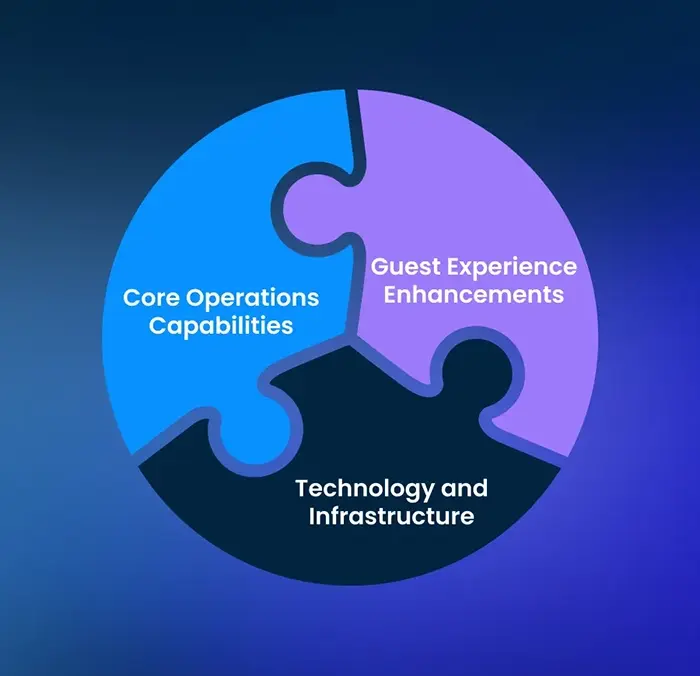
From rustic vineyard retreats to ultra-minimalist urban lofts, there is a wide range of boutique hotels. However, the best ones share a common set of operational, guest-facing and technical competencies. An effective boutique hotel management system simplifies workflows, improves guest engagement and supports long-term growth without adding workload. Combine the following features to maximize daily efficiency, secure margins and protect staff bandwidth.
Core Operations Capabilities
The operational foundation piece requires an engine that matches your property's physical footprint, staffing scale and goals. A 15-room inn could suffocate its daily operations with an enterprise tool, and a multi-property collection would quickly stall the reservation management of a lightweight B&B tool. A management tool’s core capabilities shouldn't force you to change how you run your hotel; they should mirror your operational rhythm, automating the heavy administrative lifting so your team can focus on growth.
To build a flawless operational foundation, independent hoteliers must prioritize these non-negotiable core pillars:
Front Desk Management: Streamline check-in, checkout, room assignments and guest requests from a centralized dashboard.
Housekeeping and Maintenance: Coordinate cleaning schedules, maintenance requests and staff workflows to better manage room cleanliness and room readiness.
Billing and Accounting: Simplify invoicing, folio management and secure payment processing workflows.
Reporting and Analytics: Access real-time operational and revenue insights to support faster decision-making.
Process Automation: Reduce manual tasks with automated workflows for guest communication, payments and operational updates.
Guest Experience Enhancements
Once your operational foundation is solid, you can more easily build the guest journey on top. Because unique experiences are the lifeblood of boutique hotels, this layer must be tightly integrated with your core system to create a seamless, one-of-a-kind journey for guests without adding administrative strain on your team.
To meet modern traveler expectations for instant, mobile-first convenience while preserving your signature human touch, prioritize tools that deliver:
Engagement and Personalization: Create tailored guest experiences through personalized messaging, preferences and targeted offers.
Mobile Accessibility: Give guests mobile-friendly options for check-in, room access, payments and communication.
Upselling and Ancillary Revenue: Increase revenue beyond room rates with automated upgrades, add-ons and dynamic pricing opportunities.
Integrated Communication: Centralize guest conversations across channels with tools like guest messaging.
Technology and Infrastructure
Last but not least is your infrastructure backbone — the technical foundation that future-proofs your investment. Your operational base and guest journey components need a modern, secure, easy-to-deploy architecture that can grow with your business goals. Choosing a cloud-first infrastructure means your lean team can securely manage the property from anywhere, eliminating the headache of outdated local servers and manual software updates.
Look for software built with:
Cloud-Based Infrastructure: Access hotel operations securely from any device without relying on on-premise servers.
Third-Party Integrations: Easily connect with relevant platforms such as CRMs, payment providers and other hospitality tools.
User-Friendly Interface: Reduce training time with intuitive dashboards and simplified workflows for hotel staff.
Scalability: Support future growth across additional rooms, properties or operational needs without replacing systems.
How to Select the Best Boutique Hotel Software for Your Property
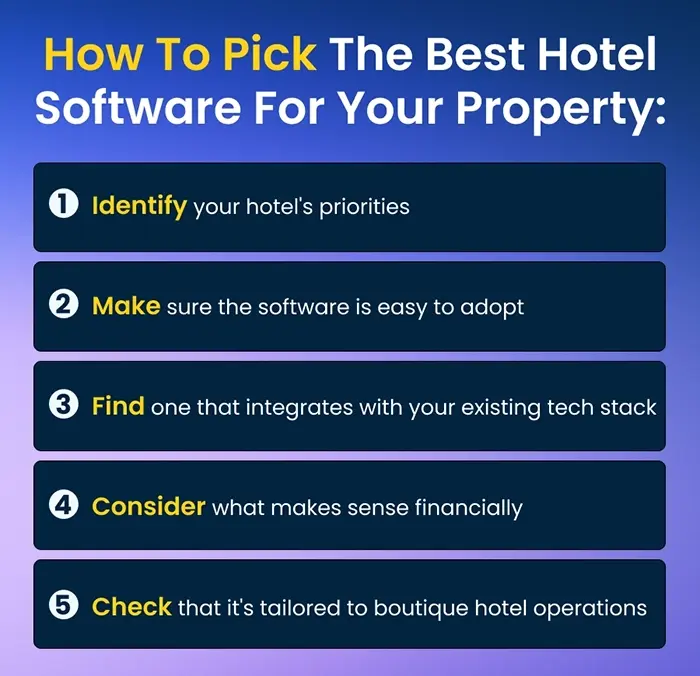
There’s a lot to consider when choosing your next technology platform, but you’ll want to focus on usability, flexibility, integration and long-term cost. Think of it as an accelerator for your business. The ideal system should reduce repetitive manual tasks, improve the guest experience and fit the size and scale of your property without overwhelming your team. By putting your top candidates through these five strategic steps, you can confidently choose a platform that supports your vision:
1. Identify Your Operational Priorities
Every boutique hotel operates differently, which means the best software choice depends heavily on your property’s operational goals. Some hotels prioritize faster check-in experiences and guest communication, while others focus on housekeeping coordination, direct bookings or ancillary revenue opportunities.
Before evaluating vendors, identify the biggest operational bottlenecks your team faces today. Understanding where staff spends the most time and where guest friction occurs most often makes it easier to prioritize the features that will have the biggest impact. Questions to consider include:
Which operational tasks consume the most staff time?
Where do guests experience the most friction?
Which manual processes should be automated first?
What revenue opportunities are currently being missed?
2. Evaluate Ease of Use for Lean Teams
If it’s hard to understand, it won't work. Software that requires extensive onboarding or has complex workflows can hinder adoption and increase operational strain, particularly in boutique hotels with smaller teams handling multiple responsibilities.
Look for platforms with intuitive dashboards, mobile accessibility and simplified workflows that staff can learn quickly. The best hotel software for boutique hotels features a user-friendly interface that reduces time spent on troubleshooting or employee training. Important usability factors include:
Intuitive interface design
Minimal onboarding and training requirements
Mobile-friendly functionality for staff and guests
Easy access to support and troubleshooting resources
3. Assess Integration Capabilities
Your tools are only as powerful as their ability to talk to one another. Watch out for fragmented technology that forces your team into the frustrating role of human “middleware” — manually copy-pasting reservation numbers, duplicating billing entry tasks and trying to piece together guest histories across disconnected screens — while your guest watches.
When evaluating software, prioritize platforms that integrate with your existing PMS, CRM, payment providers or guest engagement tools. Strong integrations create a unified tech stack and improve operational visibility across departments. Key integrations to evaluate include:
PMS and reservation systems
Payment and billing platforms
CRM and guest profile tools
Communication and messaging systems
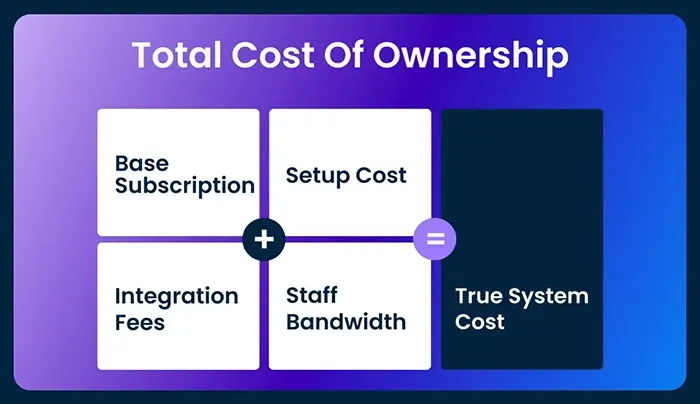
4. Consider Total Cost of Ownership
Is it worth it? Remember, software costs extend beyond the initial subscription price. Boutique hotels should evaluate onboarding fees, integration costs, support services and long-term scalability when comparing platforms.
A lower-cost solution may appear attractive up front but create additional expenses later through limited functionality, operational inefficiencies or expensive add-ons. Evaluating total value rather than just monthly pricing leads to better long-term investment decisions. Cost considerations should include:
Subscription and licensing fees
Implementation and onboarding costs
Integration and customization expenses
Ongoing support and scalability pricing
5. Look for Boutique-Specific Functionality
Go for a tailored product. Many enterprise hotel systems are designed primarily for large brands and complex corporate operations. Boutique hotels usually get more out of software that was made for smaller teams, personalized service models and flexible guest experiences. Consider software that builds around the reality of a location, like at this hotel that is so remote it can only be reached by train. Its software now arranges pick-ups for guests as part of mobile check-in.
To achieve customization, look for platforms that prioritize guest engagement, mobile-first experiences and operational automation for independent hotels. Hospitality-specific AI, personalized communication tools and streamlined workflows are especially valuable for boutique properties competing on service quality and efficiency. Boutique-focused capabilities may include:
Mobile check-in and contactless guest experiences
Personalized guest communication tools
Automated upselling and ancillary revenue features
Hospitality-specific AI and workflow automation
Enhance Boutique Hotel Operations with Technology from Canary
Boutique hotels need technology that simplifies operations without sacrificing the personalized service that sets their properties apart. Canary’s guest management system gives independent hotels an all-in-one platform to automate workflows, improve guest communication and create seamless digital experiences across the entire guest journey.
Built specifically for hospitality, Canary combines AI-powered guest engagement with operational automation to help smaller teams work more efficiently while delivering high-touch service. From mobile check-in and AI Guest Messaging to upsells and Smart Checkout, Canary modernizes boutique hotels’ operations, reduces front desk workload and unlocks new revenue opportunities.
Key Canary features for boutique hotels include:
Mobile Check-In and Smart Checkout for faster arrivals and departures
AI-powered Guest Messaging across text, webchat and voice
Automated upselling tools that increase ancillary revenue
Mobile Key integrations for contactless guest access
Hospitality-specific AI workflows designed for hotel operations
Centralized guest communication and operational visibility
Digital Compendium tools that improve on-property engagement
Streamlined payment and authorization workflows
Book a demo today and see how Canary's boutique hotel management software can streamline your operations and deliver a better guest experience.






.avif)

